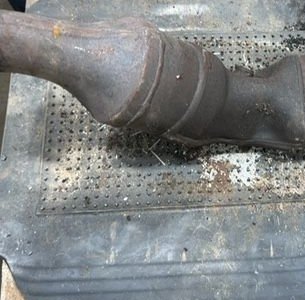
Foil vs. Bead Catalytic Converters: What's the Difference and What Are They Worth in Canada?
Most people selling scrap catalytic converters don't know what's inside them — and that gap costs money. If you've ever handed over a cat at a scrap yard and wondered whether you got a fair price, the answer often comes down to one question: was it foil or bead? Understanding the difference between these two internal designs is one of the fastest ways to stop leaving money on the table, whether you're an individual seller in Sydney, Nova Scotia or an auto shop moving a pallet of cores every month.
As a catalytic converter buyer Sydney residents and Cape Breton auto recyclers deal with regularly, best-catalytic-converter-price.ca exists to make sure you understand what you have before you sell it. Let's break down both converter types — what they contain, how they're valued, and how to make sure you're getting a price that reflects actual market conditions in Canada.
What Is a Foil-Style Catalytic Converter?
Foil catalytic converters — sometimes called metallic substrate converters — use a thin, corrugated metallic foil rolled into a honeycomb-style structure. That substrate is typically made from a stainless steel alloy, and the precious metal coating (platinum, palladium, and rhodium) is applied directly to the surface of that foil.
You'll find foil-style converters most commonly on European vehicles — BMW, Mercedes-Benz, Volkswagen, Audi, Porsche — as well as some older North American performance vehicles. They were also used extensively on diesel applications and some industrial equipment. Visually, if you cut one open, the inside looks like tightly wound metallic ribbon rather than a ceramic block.
Key characteristics of foil converters:
- Metallic interior — heavier than ceramic per unit of substrate volume
- Often shorter and more cylindrical in shape
- More heat-resistant, which is why they were favored for high-performance and diesel applications
- Precious metals are applied as a wash over the foil surface
- Generally contain lower platinum group metal (PGM) loadings per unit than comparable ceramic converters
That last point matters. Lower PGM loading means the raw material value is typically less per converter compared to a high-grade ceramic unit. However, foil converters from European luxury vehicles can still carry meaningful value — it depends heavily on the make, model, and the specific part number on the converter shell.
What Is a Bead-Style Catalytic Converter?
Bead catalytic converters use a ceramic bead substrate — literally small, loose pellets packed inside the converter housing. These beads are coated with the platinum group metals (PGMs): primarily platinum, palladium, and rhodium. The beads tumble freely inside the shell, which is why these units have a distinct rattling sound when shaken.
Bead-style converters were common on older North American vehicles — GM trucks and cars from the 1970s through the mid-1980s in particular — before ceramic honeycomb designs became dominant. You'll also find them on some older industrial and off-road equipment. They're less common in modern vehicles, but auto recyclers and scrap collectors in Nova Scotia who work with older domestic iron still encounter them regularly.
Key characteristics of bead converters:
- Interior contains loose ceramic beads — shake the unit and you'll hear them
- Typically larger and heavier than equivalent foil units
- Higher PGM loading per unit in many cases — particularly older GM units
- Easier to process for smelters since the beads can be separated from the shell
- Often priced well by experienced buyers who know what they contain
Bead converters can surprise sellers who don't know what they have. Because they're old and often look rough, some scrap yards will low-ball them or treat them like generic scrap. That's exactly the wrong call. An informed buyer — or a competitive auction platform — will price these based on their actual PGM content, not their appearance.
If you're unsure what type of converter you're holding, read Canadian catalytic converter pricing guides that walk through identification by vehicle type, shape, and sound.
What Are Foil and Bead Converters Worth? Understanding Scrap Metal Prices Today
This is where most sellers get burned — they assume all catalytic converters are worth roughly the same amount. They're not. Value is driven by PGM content, and PGM content varies dramatically between converter types, vehicle applications, and individual part numbers.
Scrap metal prices today — specifically for platinum, palladium, and rhodium — fluctuate constantly based on global commodity markets. That means the price of a foil or bead converter changes week to week, sometimes day to day. General valuation ranges exist, but any buyer quoting you a flat price for every converter without checking assay data or reference databases is not giving you a market-based price.
General valuation factors for foil converters:
- European luxury foils (BMW, Porsche, Mercedes) tend to be worth more than generic economy vehicle foils
- Diesel foils often have different PGM ratios — sometimes heavier in platinum
- Condition matters: melted, damaged, or aftermarket foil units are worth significantly less
- The outer shell material (stainless) has scrap value, but the foil substrate is the driver of price
General valuation factors for bead converters:
- Older GM bead units from the late 1970s and early 1980s can carry higher PGM loadings
- The total volume of beads matters — heavier units with more beads generally mean more PGMs
- Contaminated or oil-soaked beads can reduce recovery yield at the smelter
- Provenance helps: knowing the vehicle and year improves price accuracy
Disclaimer: Catalytic converter prices fluctuate with platinum, palladium, and rhodium markets. Always check current Canadian catalytic converter prices before selling. The figures above reflect general market dynamics, not guaranteed pricing.
Why Sydney and Nova Scotia Sellers Deserve Better Than a Single Buyer Quote
Here's the honest problem with selling catalytic converters through a single local contact: you have no idea if you're getting a fair price. One buyer, one quote, no competition. That's a pricing environment that favors the buyer — not you.
For sellers in Sydney and across Nova Scotia, geography has historically made this worse. Fewer buyers means less price competition. Scrap yards that do buy cats may not specialize in foil or bead units, which means they're applying generic pricing that doesn't reflect what's actually in the converter.
This is the exact problem that SMASH was built to fix. Canada's B2B scrap recycling marketplace, SMASH connects sellers with vetted buyers across North America through a competitive auction format. When multiple qualified buyers bid on your inventory — whether it's a single bead converter or a drum of foil units — competition does what it's supposed to do: it reveals the actual market price instead of one buyer's preferred margin.
More buyers means better price discovery. That's not a slogan — it's basic economics applied to scrap metal.
How to Get the Best Price for Foil and Bead Converters in Canada
Selling scrap catalytic converters well requires more than just showing up at a scrap yard. Here's a practical process that actually works:
- Identify what you have. Foil or bead? European or domestic? Shake the unit — beads rattle. Check the vehicle make and model if you have access to that information. A VIN can help narrow down the exact converter specification.
- Document your inventory. Photo each unit. Note the serial number or part number stamped on the shell. This documentation gives buyers more confidence and supports accurate pricing — especially for foil converters where the part number drives valuation.
- Don't clean or tamper with the converter. Buyers want to assess condition themselves. Drilling, cutting, or washing a unit can reduce value or raise red flags.
- Get multiple quotes. One quote is not a market price. Two quotes is barely better. A competitive platform that puts your inventory in front of multiple vetted buyers gives you actual price discovery.
- Understand current PGM spot prices. Platinum, palladium, and rhodium prices move constantly. Knowing the general direction of the market when you sell helps you evaluate whether a quote is reasonable.
- Use SMASH for volume or specialty units. For foil or bead converters — where pricing requires real knowledge — platforms like SMASH connect you to buyers who specialize in these units and can price them accurately.
Whether you're a solo collector in Cape Breton sitting on a handful of old GM bead units or an auto shop in Sydney with a growing pile of European foil cores, the process is the same: document well, create competition, and don't settle for the first number someone throws at you.
To get the best catalytic converter price in Canada, you need buyers who actually know the difference between a foil and a bead — and who price accordingly.
Frequently Asked Questions
Q: How do I know if my catalytic converter is foil or bead style?
Shake the converter. If you hear loose rattling, it's a bead-style unit with ceramic pellets inside. Foil converters won't rattle — they have a fixed metallic substrate. You can also identify by vehicle: European makes commonly use foil, while older North American trucks and cars (particularly pre-1985 GM) often used bead-style converters.
Q: Are bead-style converters worth more than foil converters?
Not always — it depends on the specific unit. Some older GM bead converters carry high PGM loadings and can be worth significant money. Foil converters from European luxury vehicles can also command strong prices. The only reliable way to know is to have the unit identified by part number and priced against current PGM spot rates.
Q: Where can I find a catalytic converter buyer in Sydney, Nova Scotia?
Local scrap yards in Sydney and across Cape Breton may buy catalytic converters, but single-buyer quotes rarely reflect true market value. For better price discovery, use a platform like SMASH that connects your inventory to multiple vetted buyers across Canada. You can also start with a free quote at best-catalytic-converter-price.ca to understand what your converter is worth before you sell.
Q: What precious metals are in foil and bead catalytic converters?
Both foil and bead converters contain platinum, palladium, and rhodium — the three primary platinum group metals (PGMs) recovered in catalytic converter recycling. The ratio and total loading of each metal varies by converter type, vehicle application, and manufacturer specification. These metals are what drive the scrap value of every converter.
Q: Does converter condition affect the scrap price I'll receive?
Yes, significantly. Damaged, melted, cracked, or aftermarket replacement converters are worth less than original equipment units in reasonable condition. For bead converters, contaminated or oil-soaked beads reduce recovery yield at the smelter, which buyers factor into their offers. Document your converters with photos before selling — it helps buyers price accurately and builds trust in the transaction.
If you're sitting on foil or bead converters and you're not sure what they're worth, don't guess — and don't settle for one opinion. Get a free quote at best-catalytic-converter-price.ca and find out what the Canadian market is actually paying today. Competition reveals the real price. That's always been true in scrap, and it's especially true for specialty units like foil and bead converters where knowledge — and the right buyers — make all the difference.
Stay sharp on scrap metal market movements and catalytic converter pricing in Canada by following SMASH on LinkedIn — regular updates on PGM markets, recycling industry trends, and what's moving in the scrap metal space across North America.