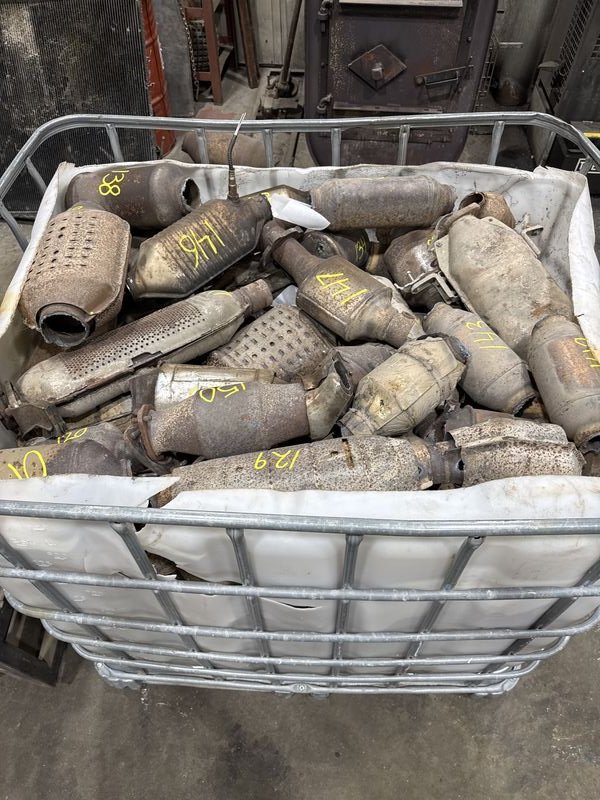
Why the Serial Number on Your Catalytic Converter Is Worth More Than You Think
Most people selling a scrap catalytic converter focus on the wrong thing first. They ask about the palladium price today — which matters — but they skip the step that actually determines how much their specific converter is worth: reading the serial number. That number is the difference between getting a fair, data-backed price and leaving money on the table with a buyer who lowballs because they can.
If you're in Gatineau or anywhere in Quebec trying to sell a cat, this guide gives you the practical knowledge to decode what's stamped on your converter, understand what drives its value, and avoid the common mistakes that cost sellers hundreds of dollars per unit.
---What Catalytic Converter Serial Numbers Actually Tell You
A catalytic converter serial number isn't just a product code. It's a fingerprint. It tells a trained buyer — or a data platform — exactly which vehicle make and model the converter came from, what substrate type is inside, and critically, what loading of platinum group metals (PGMs) — platinum, palladium, and rhodium — was used in manufacturing.
That PGM loading is what drives scrap catalytic converter value. Two converters that look identical from the outside can differ by $200 or more depending on the serial. Some OEM converters from certain Japanese and European manufacturers carry significantly higher palladium and rhodium content than aftermarket or domestic equivalents. Without the serial number, that distinction disappears — and buyers who know this will price to their advantage, not yours.
Here's what serial numbers typically encode:
- Manufacturer code — identifies the OEM or aftermarket supplier
- Vehicle application — the make, model, and engine type the converter was built for
- Substrate type — ceramic (more fragile, common in older vehicles) or metallic foil
- Emissions standard — ULEV, SULEV, or LEV ratings influence PGM loading
- Production batch or date code — relevant for tracing recalled or flagged units
Not every converter follows the same format. North American, European, and Japanese converters use different stamping conventions. Some numbers appear on a heat shield. Others are welded onto the body or laser-etched on the end cap. Knowing where to look is step one.
How to Find and Read the Serial Number on a Scrap Cat
Before you can decode anything, you need to locate the number. On most vehicles, catalytic converters sit between the exhaust manifold and the muffler — typically underneath the car, midway along the exhaust pipe. The serial number is usually stamped or welded directly onto the converter body, though location varies by manufacturer.
Here's a straightforward process for reading it correctly:
- Clean the surface. Road grime, rust, and heat discoloration obscure serial numbers. Use a wire brush and a rag. A flashlight helps significantly in low light.
- Photograph it clearly. Take a high-resolution photo before and after cleaning. This matters for documentation and remote quoting — buyers who can't verify the serial in your photo will default to a lower offer.
- Record exactly what you see. Include every digit, letter, and symbol. A single transposed character can pull up the wrong converter in a lookup database and misquote the value entirely.
- Note the converter's physical condition. Is the substrate intact or rattling? Are the end caps damaged? Physical condition affects the price a buyer will pay, even when the serial matches a high-value unit.
- Cross-reference with a VIN if you have one. On a full vehicle, the VIN narrows down which OEM converter should be present and flags if a replacement or non-OEM unit was installed.
If the serial number is missing, damaged, or illegible — which happens more often on older vehicles — reputable buyers will typically weigh and assay the converter rather than using a serial-based price. That's a legitimate process, but it tends to work against sellers who aren't tracking weight and metal content themselves. Proper documentation from the start protects your position in that negotiation. To get the best catalytic converter price in Canada, documentation isn't optional — it's leverage.
Palladium Price Today and Why It Changes Your Serial's Value in Real Time
Here's the part most casual sellers don't fully understand: the palladium price today is a live variable, and it directly affects what your converter is worth on any given day. Palladium is the dominant PGM in gasoline-engine catalytic converters, often accounting for the largest share of a converter's scrap value. When palladium spikes, high-palladium units become significantly more valuable. When it corrects, those same serials are worth less — even though the physical converter hasn't changed.
Platinum and rhodium follow their own market cycles and don't always move in sync with palladium. Rhodium, historically the most volatile of the three, has seen dramatic price swings over the past decade. A converter with high rhodium loading — common in certain diesel and European gasoline converters — can shift in value dramatically over a short window. This is why timing matters, and why serial identification feeds directly into the pricing conversation.
For sellers in Gatineau and across Quebec, this means checking current PGM spot prices before you sell isn't just smart — it's the baseline. You can check current Canadian catalytic converter prices to stay informed on what the market is actually offering before you commit to a buyer.
Disclaimer: Catalytic converter prices fluctuate daily based on PGM spot prices and market demand. Always verify current rates before selling.
Scrap Metal Inventory Management: Why It Matters for Catalytic Converter Sellers
If you're an auto shop, a scrap collector, or a recycling operation handling multiple converters at once, informal tracking — a notebook, a mental list, a handshake agreement with one buyer — isn't a system. It's a liability. Scrap metal inventory management done properly means every unit is photographed, serialized, logged, and matched to a buyer quote before it leaves your hands.
This matters for several reasons specific to catalytic converters:
- Regulators in Quebec and across Canada increasingly require documentation of scrap converter transactions. Tracking serial numbers is becoming a compliance issue, not just a best practice.
- High-value units — those carrying significant palladium, platinum, or rhodium — can be inadvertently mixed with lower-value aftermarket cats if inventory isn't tracked by serial. You lose money on the spread.
- Buyers who work with documented, serial-tracked inventory offer more competitive pricing because their own processing risk is lower. Better data on your end translates to better offers on theirs.
- Dispute resolution. If a buyer claims the converter you sent doesn't match the serial you quoted, your photo documentation and serial log is your defense.
This is exactly where platforms like the SMASH Recycling auction platform add real value. SMASH's inventory tools are built for this — serial tracking, photo documentation, VIN lookup for vehicle-sourced units — so your lot is organized and verifiable before it ever goes to market. That documentation builds buyer confidence and supports better price discovery through competitive bidding rather than a single cold call to one buyer who sets the price unilaterally.
For recyclers operating in Gatineau and the broader National Capital region, working with vetted, transparent buyers matters. The scrap catalytic converter market rewards sellers who show up with documentation. If you want to read Canadian catalytic converter pricing guides that go deeper on inventory practices, there's a solid library of content available to help you build a better process.
Finding Reliable Catalytic Converter Buyers — What to Look For
Searching for catalytic converter buyers near me open now is usually the starting point. That urgency is understandable — especially if you've just pulled a converter from a vehicle and want to move it today. But the closest buyer and the best buyer are rarely the same thing. Speed costs money if you're not careful.
Here's what distinguishes a reliable buyer from one who's just convenient:
- Serial-based pricing. A credible buyer will quote you based on the specific serial number, not just the converter's physical appearance or a visual guess. Buyers who refuse to quote by serial are working with information asymmetry — theirs, not yours.
- Transparent PGM reference pricing. Ask which price date and spot index they're using to calculate your offer. Buyers who can't or won't answer that question clearly are pricing opaquely.
- Vetted operations. With catalytic converter theft still a documented issue across Canada, legitimate buyers require proper documentation — bill of lading, seller ID, vehicle ownership where applicable. If a buyer doesn't ask for documentation, that's a red flag, not a convenience.
- Competitive process. A single offer from a single buyer is not a market price. It's one person's opinion of what they can get away with paying. Competition between multiple vetted buyers — the model SMASH is built on — produces better price discovery for the seller.
Quebec sellers, including those in Gatineau, have access to national buyers through digital platforms. You don't need to sell locally to get a fair price — you need to sell transparently, with documentation, to buyers who are competing for your material.
Frequently Asked Questions
Q: How does the palladium price today affect what I get for my scrap catalytic converter in Gatineau?
Palladium is the primary precious metal in most gasoline-engine catalytic converters, so its daily spot price directly influences your scrap converter's value. When palladium prices rise, high-palladium serials fetch more. When prices drop, so does the payout. Check current PGM spot prices before you sell and make sure your buyer is pricing off a transparent, current reference rate.
Q: Can I get a price quote without physically bringing my converter to a buyer?
Yes — with the right documentation. A clear photo of the serial number, the converter body, and both end caps is enough for most reputable buyers to generate a firm or indicative quote remotely. Platforms that support photo documentation make this even more straightforward. This is especially useful for sellers in Quebec who may not have a high-volume buyer nearby.
Q: What if my catalytic converter's serial number is missing or unreadable?
Buyers will typically shift to a weight-and-assay process, where the converter is weighed and sampled to estimate PGM content. This is legitimate but gives you less pricing leverage because you can't cross-reference against known serial data. Where possible, preserve and document serial numbers before converters are moved or cut.
Q: Are scrap catalytic converter prices in Gatineau different from the rest of Canada?
The underlying PGM market is national — and increasingly global — so the serial-based pricing reference doesn't change significantly by city. What varies is logistics cost, local buyer competition, and currency (CAD). Using a platform with vetted buyers across Canada means Gatineau sellers access national competition, not just local pricing.
Q: Do I need to declare serial numbers when selling catalytic converters in Quebec?
Documentation requirements for scrap converter sales have tightened across Canada, including in Quebec. Many buyers now require serial numbers, seller identification, and proof of vehicle ownership for converters removed from vehicles. Always ask your buyer about their documentation requirements upfront — legitimate operations will have clear answers.
---If you're in Gatineau, running an auto shop in Quebec, or building a scrap collection route anywhere in Canada, the serial number on your catalytic converter is the starting point for every pricing conversation. Know what you have, document it properly, and sell it through a process that gives you real competition — not a single call to one buyer who controls the price. Get the best Canadian price for your catalytic converter at best-catalytic-converter-price.ca — get a free quote and see what your serial is actually worth.
Follow SMASH on LinkedIn for ongoing scrap metal market insights, PGM price updates, and practical guides for recyclers across North America.