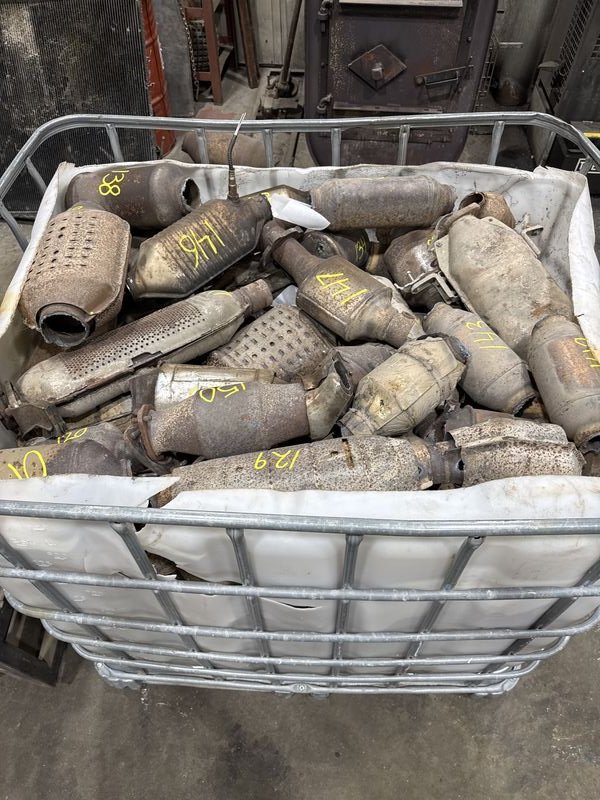
Most people assume a catalytic converter is a catalytic converter. Pull it off, weigh it, get paid. But if you've ever gotten wildly different quotes for two cats that look nearly identical, you already know that's not how this works. The difference between an OEM unit and an aftermarket replacement can mean hundreds of dollars — sometimes more — and if you're selling in a competitive market like New Westminster, not understanding that gap is leaving real money on the table.
This is especially true right now. Precious metal markets in 2026 have stayed volatile, and buyers are scrutinizing loads harder than ever. Get the best catalytic converter price in Canada by knowing exactly what you have before you sell it.
What Makes OEM Catalytic Converters Worth More
OEM stands for Original Equipment Manufacturer. These are the converters built to factory specification — the ones that came on the vehicle when it rolled off the assembly line. They're engineered to meet strict emissions standards for the original market the vehicle was sold in, and that engineering directly affects their precious metal loading.
To meet North American emissions thresholds, OEM converters are packed with higher concentrations of platinum, palladium, and rhodium — the three platinum group metals (PGMs) that actually do the catalytic work. The substrate inside carries a dense washcoat of these metals. More PGM loading means more refining yield, and more yield means a higher catalytic converter scrap value when that unit reaches a smelter.
- Platinum (Pt): Handles oxidation of hydrocarbons and carbon monoxide
- Palladium (Pd): Works across a wider temperature range, common in gasoline converters
- Rhodium (Rh): Reduces nitrogen oxides — the rarest and often most valuable of the three
OEM units also tend to be larger and heavier, with more substrate surface area. A genuine Toyota, Honda, or GM catalytic converter from a full-size truck or SUV can carry significant PGM value. That's why buyers in New Westminster and across British Columbia pay close attention to make, model, and year — not just the shape of the shell.
Why Aftermarket Cats Have Lower Catalytic Converter Scrap Value
Aftermarket converters are replacement parts. They're built to pass an emissions test — not necessarily to match the OEM's PGM loading. Manufacturers producing aftermarket units for the repair market have a cost incentive to use less precious metal. The converter still functions well enough to keep a car on the road, but the washcoat is thinner and the PGM content is a fraction of the original.
Some aftermarket converters contain so little platinum, palladium, and rhodium that they barely register as valuable at the refinery. A recycler who processes a load of assumed OEM units only to find them stacked with aftermarket replacements will get hit hard on the final settlement. That's exactly why experienced buyers and platforms scrutinize photos, VINs, and serial numbers before committing to a price.
There are a few quick signs you might be looking at an aftermarket unit:
- A visible weld seam where the converter was clamped onto the exhaust rather than factory-brazed
- A generic or stamped part number rather than an OEM-style code
- Lighter overall weight relative to the shell size
- Lack of a honeycomb ceramic substrate when you rattle it — some cheap units use metallic foil substrate with lower PGM retention
- A brand name associated with replacement parts (Walker, Davico, Eastern) rather than the vehicle manufacturer
None of these are absolute rules, but any combination of them should flag the unit for a closer look before you quote a seller or sell into a load.
Cat Converter Prices New Westminster: How Local Market Dynamics Play In
Location matters more than people realize when it comes to cat converter prices in New Westminster. British Columbia's Lower Mainland is a high-volume corridor for scrap — auto recyclers, dismantlers, collision shops, and independent collectors all feed into the same regional supply chain. That density creates competition among buyers, which in theory should push prices up. But it also means buyers are highly experienced at identifying what they're actually buying.
A yard in New Westminster that buys from a mix of sources — retail drop-offs, fleet maintenance depots, towing companies — sees a wide variety of units every week. OEM converters from Japanese domestics (Hondas, Toyotas, Subarus) are common in this region given the vehicle mix. These tend to carry solid PGM values. Aftermarket replacements, especially from older vehicles that have had multiple exhaust repairs, show up just as frequently — and experienced buyers here will price them accordingly.
If you're selling a mixed load without declaring which units are OEM versus aftermarket, expect buyers to price conservatively. That's not a scam — it's risk management. The way to get paid for your OEM units at OEM prices is to document them properly and put them in front of buyers who compete for the business. Platforms like SMASH create exactly that environment: documented inventory, vetted buyers, and competitive bids rather than a single take-it-or-leave-it quote.
Want to know what the market looks like right now? Check current Canadian catalytic converter prices before you commit to any buyer.
Precious Metal Prices and Why OEM Values Fluctuate
Even among OEM converters, values aren't fixed. They move with the spot prices of platinum, palladium, and rhodium — and those markets can shift significantly within weeks. Rhodium in particular has a history of dramatic price swings; at various points in recent years it has been the most valuable metal by weight on the periodic table. When rhodium spikes, OEM converters from vehicles known for heavy rhodium loading become disproportionately valuable.
Palladium is the workhorse metal in most gasoline OEM converters produced since the mid-2000s. Manufacturers shifted toward palladium-heavy formulations as palladium prices were historically lower than platinum. That equation has shifted multiple times since, making palladium content a moving target for valuations. Diesel OEM converters lean more heavily on platinum — a different pricing profile entirely.
The takeaway: scrap metal prices today for catalytic converters are not a single number. They're a function of which metals are in the unit, how much of each, and what those metals are trading at right now. A generic online price list is almost always out of date. Real-time pricing through a competitive auction platform gives you an actual market read — not a stale average. Compare scrap metal bids from Canadian buyers to see what competition actually does for your bottom line.
How to Identify What You Have Before You Sell
You don't need a lab to get a reasonable read on whether your converter is OEM or aftermarket. You need information and a systematic approach. This matters whether you're an individual with one unit off your own vehicle or a shop moving twenty cats a month.
Start with the vehicle. If you know the year, make, model, and engine size, you can look up the OEM converter specification. VIN-based lookup tools — like the one built into SMASH's inventory system — let you match the unit to the vehicle it came from and get a realistic value range before you walk into any negotiation.
Next, look at the unit itself:
- Find the serial number or part number. OEM units will have manufacturer-specific codes. Cross-reference these against known OEM databases.
- Check the weight. OEM converters are typically heavier than aftermarket equivalents of similar shell size. A postal scale or shop scale is all you need for a quick comparison.
- Photograph the unit before selling. Both the shell and any visible stamps. This protects you from disputes and helps buyers price accurately without a conservative discount.
- Note the vehicle history. A vehicle with a documented exhaust replacement — especially at a muffler shop rather than a dealership — is more likely to have an aftermarket cat.
For anyone doing volume, documentation isn't optional — it's how you consistently get paid OEM prices for OEM units. Buyers will discount for uncertainty. Remove the uncertainty and the price reflects reality. Read Canadian catalytic converter pricing guides to build your knowledge before your next sale.
Getting Paid Fairly: Why Competitive Bids Beat a Single Quote
Here's the uncomfortable truth about selling to a single buyer: you have no idea if that's a fair price. The buyer knows the market. You might not. That information gap is the entire reason one-call pricing has persisted in the scrap industry for decades — it's profitable for the buyer.
The answer isn't to become a precious metals expert overnight. The answer is competition. When multiple vetted buyers see the same documented load and bid against each other, the price converges toward what the market actually supports. That's price discovery. It works the same way whether you're selling a single OEM unit from a shop in New Westminster or a pallet of mixed cats from a dismantler.
SMASH is built on exactly this model. No subscription fees. Vetted buyers. Auction format with full photo documentation and serial tracking. The platform only wins when the seller wins — which means there's no incentive to steer you toward any particular buyer or lowball the process. If you're doing any volume of catalytic converter recycling near me searches trying to find a better deal, the better deal isn't in a different yard — it's in putting your load in front of more buyers at once.
If you're serious about getting a fair price for OEM converters — especially in a high-density market like New Westminster — stop guessing and start competing. The market will tell you what your cats are worth when more than one buyer has skin in the game.
Ready to find out what your converters are actually worth? Get the best Canadian price for your catalytic converter — get a free quote at best-catalytic-converter-price.ca. Prices fluctuate with precious metal markets, so current rates matter — don't rely on old quotes.
Frequently Asked Questions
Q: How much less is an aftermarket catalytic converter worth compared to OEM?
It depends on the specific units, but aftermarket converters routinely fetch significantly less than their OEM counterparts — sometimes a fraction of the price. OEM units carry higher PGM loading by design. If you're unsure which type you have, serial number lookup and weight comparison are your fastest starting points.
Q: Where can I find catalytic converter recycling near me in New Westminster?
New Westminster and the surrounding Lower Mainland have a number of active scrap buyers. Rather than calling one and accepting whatever they offer, consider documenting your units with photos and serial numbers and putting them through a competitive auction platform like SMASH. More buyers bidding means better price discovery for your specific units.
Q: Do cat converter prices in New Westminster follow the same market as the rest of Canada?
Broadly yes — PGM spot prices are global, so the underlying value of the metals is the same coast to coast. Local buyer competition, logistics costs, and regional vehicle mix can create some variation in what buyers offer. The Lower Mainland tends to be a competitive market, which generally works in the seller's favour.
Q: Does the age of an OEM catalytic converter affect its scrap value?
Age matters in two ways. First, older OEM units may have more wear on the substrate, reducing PGM recovery yield slightly. Second, some older OEM converters — particularly from certain Japanese and European vehicles — carry heavier PGM loading than modern equivalents engineered to use less precious metal. A 15-year-old OEM unit from a full-size truck can still be highly valuable.
Q: Are scrap metal prices today different from what they were six months ago for catalytic converters?
Almost certainly. Platinum, palladium, and rhodium prices move constantly based on global supply, automotive production trends, and industrial demand. A price you received six months ago should be treated as historical data, not a current benchmark. Always check current rates before selling — and use competitive bids to confirm the market is giving you a real number.
Follow SMASH on LinkedIn for ongoing scrap metal market insights and industry updates: linkedin.com/company/scrap-metal-auction-sales-hub.