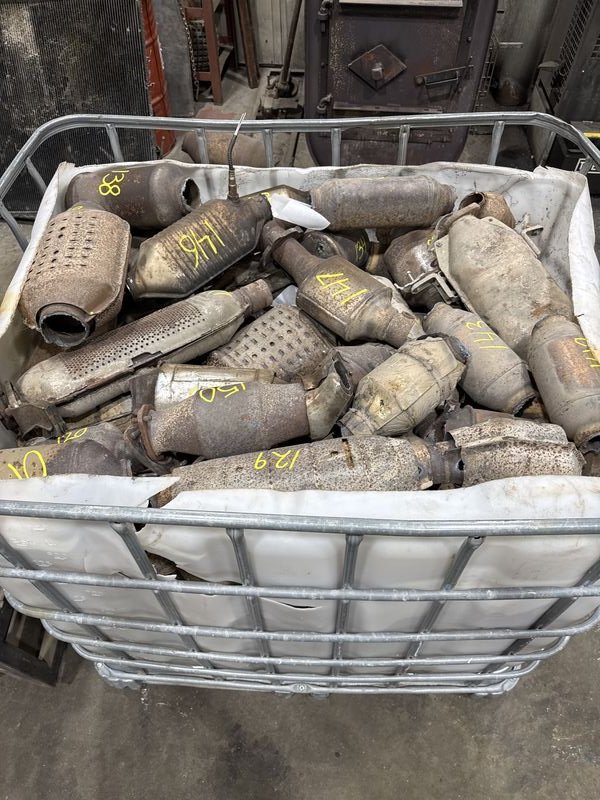
You checked the price yesterday. Today it's different. That's not a glitch — that's the scrap catalytic converter market doing exactly what it always does. If you're looking for a catalytic converter buyer in Langley and you want to know whether today is a good day to sell, this guide is for you.
Catalytic converter values are driven by the precious metals locked inside each unit — platinum, palladium, and rhodium. Those metals trade on global commodity exchanges every business day. When the markets move, your cat's value moves with it. Understanding why that happens puts you in a stronger position when it's time to sell.
What's Actually Inside Your Catalytic Converter
Most people know cats are worth something. Fewer people understand why. Inside every catalytic converter is a ceramic or metallic substrate coated with a wash of precious group metals (PGMs): platinum, palladium, and rhodium. These metals are the reason a converter that looks like a rusted tin can can be worth hundreds of dollars.
The amount of each metal varies significantly by vehicle make, model, engine size, and manufacturer. A converter from a large-displacement truck engine will typically carry more PGM loading than one from a compact four-cylinder. That's why two cats that look identical on the outside can have very different scrap values — and why serious buyers use serial numbers, VINs, and visual identifiers to price each unit accurately.
- Platinum: Used primarily in diesel converters, trades in USD per troy ounce
- Palladium: Common in gasoline converters, historically the highest-value PGM
- Rhodium: Found in smaller quantities but often the most valuable by weight — and the most volatile
Rhodium in particular can swing dramatically. It has traded at extreme highs and lows within the same calendar year. If you're wondering how much is my catalytic converter worth scrap by reg, the honest answer is: it depends on today's rhodium, palladium, and platinum spot prices — and what's actually inside your specific unit.
Why Catalytic Converter Scrap Prices Change Daily
This is the part most sellers don't fully appreciate. Scrap catalytic converter prices aren't set by local buyers based on gut feel (though some still operate that way). They're anchored to live commodity markets — the same ones that move based on mining output, industrial demand, currency exchange rates, and global economic signals.
Here's what drives the daily movement:
- PGM spot prices: Platinum, palladium, and rhodium are priced in real time on global exchanges. A 5% drop in palladium affects every converter containing it — immediately.
- USD/CAD exchange rate: PGMs are priced in USD globally. Canadian sellers effectively receive a CAD-adjusted price. When the Canadian dollar weakens against the USD, scrap values in CAD can rise even if spot prices in USD stay flat.
- Refinery demand and capacity: If refineries are backed up or reducing throughput, buyer margins tighten — and that can push offered prices lower for sellers.
- Assay data and processing yields: Buyers adjust their pricing as they receive real-world assay results from processed lots. If recent loads are running lean, buyers may price new inventory more conservatively.
- Market competition: In markets where multiple vetted buyers are bidding against each other, sellers see better price discovery. In markets dominated by one buyer, prices often stagnate.
The bottom line: scrap metal prices today are not the same as last week's prices. Checking current rates before you sell isn't optional — it's how you avoid leaving money on the table.
How to Know What Your Converter Is Worth Right Now
One of the most common questions from sellers — especially first-timers in Langley and across British Columbia — is simple: "What's my cat worth today?" The answer requires more than a quick phone call to one local yard.
To get an accurate, current value for your converter, you need a few things:
- The vehicle registration or VIN: This identifies the specific converter model and its likely PGM content. Many buyers use VIN lookup tools to identify the unit before pricing it.
- The serial number or part number on the converter: Serial-tracked pricing is more accurate than eyeballing a unit. Buyers with proper databases can identify exactly what's inside based on the serial.
- Current spot prices: These update during market hours. A buyer quoting yesterday's price for a same-day transaction is doing you no favors.
- Multiple quotes: One offer is not a market. Two offers is a starting point. Three or more competitive bids starts to look like real price discovery.
Platforms like SMASH Recycling — where verified buyers bid on your metal are built around exactly this problem. Instead of calling one buyer and accepting whatever they say, you get documented inventory entered into a system where vetted buyers compete. That competition is what reveals what your converters are actually worth on today's market.
If you want to check current Canadian catalytic converter prices, the best move is to get a real quote based on your specific unit — not a general "going rate" estimate from a buyer who only has one direction to move: down.
Why Sellers in Langley Lose Money Without Knowing It
Let's be direct. If you're selling to the same single buyer every time, you don't actually know what your converters are worth. You know what that one buyer is willing to pay. Those are not the same thing.
This is a persistent problem for individuals and even auto shops in Langley and throughout British Columbia who have a regular buyer they trust. Trust is fine. But trust without price verification is how sellers leave real money behind — sometimes significant money, especially on higher-value units with strong rhodium or palladium content.
The old model looks like this:
- You pull a converter off a vehicle
- You call your regular buyer
- They name a price
- You accept it because you have no comparison
The SMASH model looks different. Your inventory gets documented — photos, serial numbers, VIN data. Verified buyers see that documentation and submit competitive bids. You see multiple numbers. Competition does the work. If you've been wondering about a catalytic converter scrap price near me, the real answer isn't a number — it's a process. And the process matters more than any single quote.
To get the best catalytic converter price in Canada, you need a buying environment where sellers have leverage. That means documented inventory and real competition between buyers who are accountable.
Recycling Catalytic Converters the Right Way in BC
Catalytic converter recycling in British Columbia carries some specific considerations beyond just price. Since 2024–2025, provinces across Canada have tightened regulations around the documentation required to sell catalytic converters — partly in response to theft concerns. In BC, sellers may be required to provide proof of ownership or vehicle registration when selling converters, depending on the buyer and transaction type.
This is actually a feature, not a bug, for legitimate sellers. Proper documentation protects you and establishes a clean chain of custody for the unit. Buyers who ask for documentation are operating professionally. Be cautious of buyers who want to skip that step.
For catalytic converter recycling in Langley, working through a platform that requires photo documentation and serial tracking isn't just good practice — it may be required. SMASH builds that documentation layer into the process. Every unit in the system has photos, identifiers, and a record. That transparency gives buyers more confidence, and more confident buyers tend to bid more competitively.
For a deeper breakdown of how Canadian cat converter markets work, you can read Canadian catalytic converter pricing guides that walk through valuation by unit type, PGM content, and current market conditions.
Timing Your Sale: Does It Matter When You Sell?
Short answer: yes, but not in the way most people think.
Trying to "time the top" of the rhodium or palladium market is a losing game for most individual sellers. Professional commodity traders with real-time data struggle to do that consistently. What you can do is avoid selling into a known market downturn if you have the ability to hold, and make sure you're always selling into a competitive process rather than a single-buyer conversation.
Seasonal patterns exist in the scrap converter market. End-of-quarter inventory movements, new vehicle model year rollouts, and changes in automotive production can all affect demand for specific converter types. But these are macro patterns, not day-trading signals.
The more practical timing consideration: don't sell in a hurry to one buyer. If you have a batch of converters — whether you're an individual seller, a shop accumulating units, or a small collector — group them, document them properly, and run them through a competitive process. That discipline, applied consistently, produces better outcomes than chasing daily spot price movements.
If you're ready to stop guessing and start selling with real price discovery, best-catalytic-converter-price.ca is a straightforward starting point. Get a free quote based on your specific units, not a general estimate — and see what a competitive process looks like for catalytic converter buyers in Langley and across Canada.
Frequently Asked Questions
Q: How do I find a reliable catalytic converter buyer in Langley?
Look for buyers who ask for documentation — photos, serial numbers, and proof of ownership. Buyers who skip that step are a red flag. Platforms like SMASH connect sellers with vetted buyers who operate transparently, which is the most reliable way to find legitimate buyers and competitive pricing in the Langley area.
Q: How much is my catalytic converter worth scrap by reg or VIN?
Your registration or VIN identifies the specific converter model and its likely precious metal content — platinum, palladium, and rhodium. Those metals have daily spot prices that directly affect your converter's value. A serial number on the converter itself gives even more precise pricing. Use a service that does proper VIN and serial lookups for accurate same-day quotes.
Q: Why do catalytic converter scrap prices change so often?
Because they're tied to global commodity markets for platinum, palladium, and rhodium — all of which trade daily. The CAD/USD exchange rate also affects what Canadian sellers receive in real terms. Prices can shift meaningfully within a single week based on industrial demand, mining news, or broader economic signals.
Q: Is catalytic converter recycling in Langley legal, and what documentation do I need?
Yes, selling scrap catalytic converters in British Columbia is legal for legitimate sellers. You'll typically need to show proof of ownership or vehicle registration, especially since provincial regulations around converter sales have tightened in recent years. Reputable buyers and platforms require this documentation to ensure a clean, compliant transaction.
Q: How do I get the best catalytic converter scrap price near me?
The single most effective step is to get multiple competitive quotes rather than accepting the first offer. Document your converters with photos and serial numbers before approaching buyers. Using a platform that puts vetted buyers in competition with each other — rather than calling one yard — is how serious sellers consistently achieve better price outcomes.
Disclaimer: Catalytic converter scrap prices fluctuate daily based on live precious metal spot prices and market conditions. All price information on this site reflects general market context and should not be taken as a guaranteed offer. Always check current rates before selling.
Stay current on scrap metal market trends and catalytic converter pricing — follow SMASH on LinkedIn for industry updates straight from the yard floor.