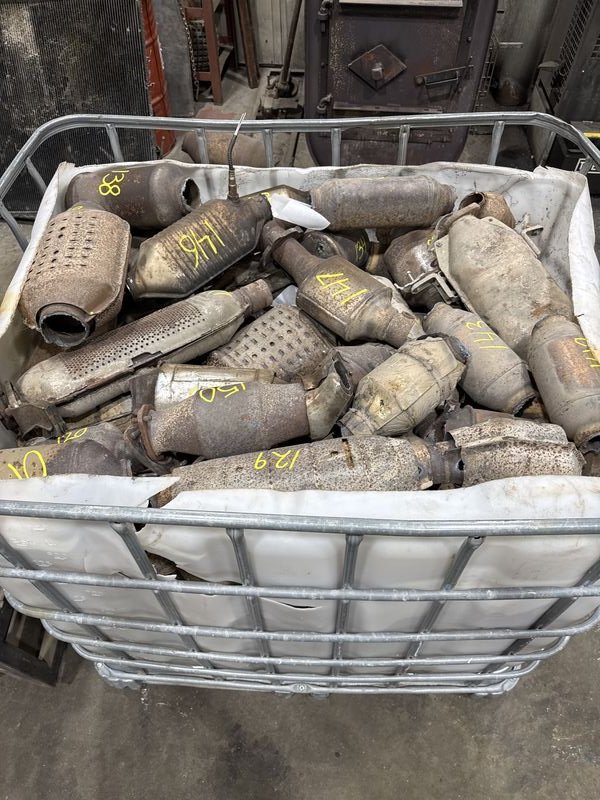
What's Actually Inside Your Catalytic Converter — And Why It Matters for Scrap Value
Most people know a catalytic converter is worth something. Few understand why. The metals packed inside a single cat can be worth more per gram than gold — and that's not an exaggeration. Understanding what's inside your converter is the first step to making sure you don't get shortchanged when it's time to sell.
The catalytic converter scrap value isn't based on the steel shell. It's based on what's inside the ceramic honeycomb substrate — three precious metals that are genuinely rare, globally traded, and in constant industrial demand. If you're sitting on a used cat in Saskatoon or anywhere else in Saskatchewan, knowing this changes how you approach the sale.
The Three Precious Metals Inside Every Catalytic Converter
Every catalytic converter contains some combination of platinum, palladium, and rhodium — often called the PGMs, or platinum group metals. These three elements are what the recycling and refining industry actually pays for. The steel housing? That's almost incidental to the price.
Here's a quick breakdown of each metal and its role:
- Platinum (Pt) — One of the most chemically stable metals on earth. In a cat, it helps convert carbon monoxide and unburned hydrocarbons into less harmful gases. Diesel vehicles tend to use more platinum than gasoline models.
- Palladium (Pd) — Highly effective at converting hydrocarbons and carbon monoxide in gasoline engines. Palladium has seen dramatic price swings over the past several years, and the palladium price today continues to influence what buyers will pay for cats from gasoline-powered vehicles.
- Rhodium (Rh) — The rarest of the three. Rhodium handles nitrogen oxides, converting them into harmless nitrogen and oxygen. Because it's so scarce, even tiny quantities of rhodium contribute significantly to a converter's overall value.
Most factory-installed converters contain all three metals in varying ratios. The exact blend depends on the vehicle make, model, engine type, and emissions standard the converter was designed to meet. A high-end European luxury sedan and a base model compact pickup are not going to produce the same payout — even if they look similar from the outside.
Why Catalytic Converter Scrap Value Varies So Much
Walk into any scrap yard with two converters and you might get wildly different prices for each. That's not random. The value comes down to measurable factors, and understanding them helps you negotiate better — or at least know when you're being lowballed.
The main factors driving cat converter value include:
- PGM content — How much platinum, palladium, and rhodium are actually in the substrate. This varies by OEM (original equipment manufacturer) and by emissions generation (pre-OBDII cats versus modern ones, for example).
- Condition of the substrate — A cracked, melted, or missing substrate means less recoverable metal. A converter with a solid, intact honeycomb is worth more.
- Vehicle application — Larger engines, performance vehicles, and heavy-duty trucks often use converters with higher PGM loading. Cats from certain luxury brands are well-known in the recycling industry for their above-average yields.
- Global spot prices — PGM prices are set on international commodities markets. The palladium price today in 2026 affects what a buyer in Saskatoon is willing to pay just as much as what a buyer in Atlanta will offer. These prices move — sometimes sharply.
- Aftermarket versus OEM — Aftermarket converters are legal replacements, but they typically contain much lower PGM concentrations. If someone swapped your OEM cat for an aftermarket unit, the scrap value drops considerably.
This variability is exactly why selling to a single buyer without shopping your cats around is a losing strategy. You simply don't know if you're getting a fair price until you see competing offers.
How PGM Markets in 2026 Are Affecting Catalytic Converter Prices in Canada
The PGM market in 2026 remains active and closely tied to global automotive production, energy transition policy, and mining supply constraints. Rhodium in particular has historically been subject to extreme price spikes due to how concentrated its global supply is — a handful of mines in South Africa account for the vast majority of world production.
Palladium has faced pressure from the accelerating shift toward electric vehicles, which don't use catalytic converters. At the same time, the enormous number of internal combustion engine vehicles still on the road — and the ongoing secondary market for their parts — keeps recycled PGM supply relevant and valuable. To check current Canadian catalytic converter prices, you need access to real-time buyer data, not a price list someone printed six months ago.
In Saskatchewan, the mix of working vehicles skews practical — trucks, fleet vehicles, farm equipment, and commercial units. Many of these applications use converters with meaningful PGM content. A yard or collector in Saskatoon sitting on a pile of cats from heavy-duty trucks and work vehicles may be holding more value than they realize.
Regulatory factors also matter. Emissions standards continue to tighten across North America, which pushes OEMs to load more PGMs into newer converters to meet thresholds. That means newer cats, on average, contain more recoverable metal — though this has to be balanced against the market price of those metals at time of sale.
Why Selling Catalytic Converters Online Gets You a Better Price
The old model for selling cats was simple: drive to a catalytic converter scrap yard near me, hand them over, take what they offer. No comparison. No competition. You had one number on the table and a take-it-or-leave-it situation.
That approach costs sellers money. Not because scrap yards are dishonest — most aren't — but because without competing offers, there's no price discovery. You don't know what your cats are actually worth on the open market.
When you sell catalytic converters online through a vetted buyer network or auction-style platform, the dynamic changes completely. Multiple buyers see your inventory. They know other buyers are looking too. That competition is what drives offers toward actual market value instead of what a single buyer thinks they can get away with.
Platforms like the SMASH Recycling auction platform are built around this idea. Instead of one phone call to one buyer, your inventory goes in front of vetted buyers who compete for it. Photo documentation, serial tracking, and accurate descriptions give buyers the confidence to bid more aggressively — because they know what they're buying. For anyone looking to get the best catalytic converter price in Canada, that competitive structure matters.
For sellers in Saskatoon and across Saskatchewan, this means you're no longer limited to whatever your local yard wants to offer. You're plugged into a broader market where buyers across North America compete on your terms.
How to Prepare Your Cats Before You Sell
Preparation isn't complicated, but it makes a real difference in what you'll get — especially when selling online where buyers are making decisions based on what you show them.
Here's what to do before you list or quote:
- Photograph every converter clearly. Capture both ends of the substrate, the exterior shell, and any visible codes or stamps. Buyers need to see the condition of the honeycomb to assess value.
- Record the serial number or OEM code stamped on the converter. These codes allow buyers to identify the vehicle application and estimate PGM content before they ever open the unit.
- Note the vehicle it came from. Year, make, model, and engine size all help buyers assign a more accurate value. A cat pulled from a 2019 F-250 with a 6.7L diesel tells a very different story than one from a 2008 Corolla.
- Don't clean or modify the converter. Buyers are looking at the original condition. Grinding, cutting, or tampering with a cat can raise flags and reduce trust — which hurts your offer.
- Separate OEM from aftermarket. Don't mix them in a single lot without disclosing which is which. Transparency gets you better bids.
If you're a shop or collector in Saskatchewan with multiple units, batching your cats by vehicle type and condition helps buyers evaluate the lot more quickly — and more confidently. More confidence means better offers. You can also read Canadian catalytic converter pricing guides to understand how different converter types are typically graded before you go to market.
Sellers looking for Saskatoon scrap metal services that connect to a wider buyer network have options beyond walking into the nearest yard. The infrastructure exists — you just need to use it.
Don't Leave Money on the Table — Use SMASH to Get Competing Offers
Knowing what's inside your catalytic converter is valuable. But knowledge alone doesn't pay out. You need a process that turns that knowledge into a fair offer — and a fair offer means more than one buyer looking at your cats at the same time.
SMASH exists for exactly this situation. Whether you're an auto shop clearing a bin of mixed cats, a recycler with a load of cores, or an individual with a handful of converters pulled from vehicles you're breaking down, the auction model puts your inventory in front of buyers who are actively competing. No subscription fees. No guessing. Just documented inventory and real bids.
If you're ready to stop guessing and start selling at prices that reflect what your cats are actually worth, now is a good time to act. PGM prices move. The market doesn't wait. Get a free quote at best-catalytic-converter-price.ca and find out what your converters are actually worth in today's Canadian market.
Price disclaimer: Precious metal spot prices for platinum, palladium, and rhodium fluctuate daily based on global commodities markets. All values mentioned are general in nature. Always check current rates before finalizing any sale.
Frequently Asked Questions
Q: What makes a catalytic converter high in scrap value?
The main driver is PGM content — specifically how much platinum, palladium, and rhodium are loaded into the substrate. Converters from larger engines, luxury vehicles, and newer emissions-compliant models typically contain higher concentrations of these metals. Condition also matters: an intact, undamaged substrate recovers more metal than a cracked or melted one.
Q: How does the palladium price today affect what I get for my cat in Canada?
Palladium is priced on global commodities markets and fluctuates daily. Since most gasoline engine converters contain palladium as their primary PGM, shifts in the spot price directly affect buyer offers — sometimes significantly. Checking current market rates before you sell helps you understand whether the offer on the table reflects real market value.
Q: Can I sell catalytic converters online from Saskatoon?
Yes. Online platforms that connect sellers with vetted buyers across North America make it straightforward to sell from Saskatchewan without being limited to local pricing. Accurate photos, serial numbers, and vehicle details are typically all you need to get competing offers. SMASH is one platform built specifically for this kind of documented, competitive scrap sales process.
Q: Is the steel shell of a catalytic converter worth anything?
The steel housing has some scrap value, but it's a small fraction of what the converter is worth overall. The real value is in the substrate and the PGMs it contains. Don't let anyone offer you only scrap steel pricing on a complete, intact converter — that's not an accurate reflection of its catalytic converter scrap value.
Q: How do I know if my converter is OEM or aftermarket?
OEM converters are installed by the vehicle manufacturer and typically have codes stamped directly on the shell that correspond to the vehicle application. Aftermarket converters are often visibly different — they may have a welded-on shape, a different finish, or generic markings. When in doubt, note the vehicle history and let the buyer help assess. OEM units almost always carry higher scrap value than aftermarket replacements.
---Stay current on scrap metal market trends and catalytic converter pricing in Canada — follow SMASH on LinkedIn for industry updates and market insights.