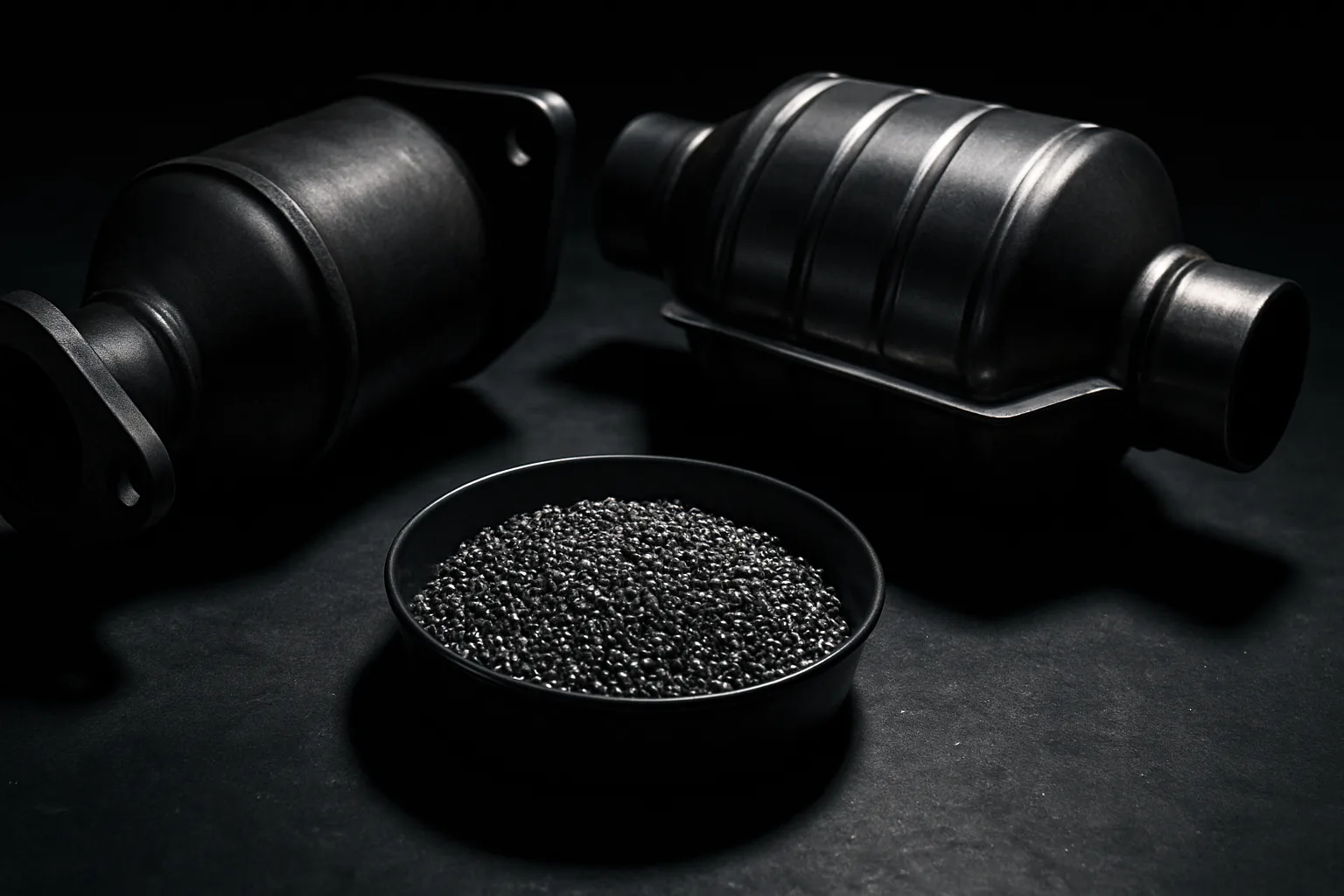
OEM vs. Aftermarket Catalytic Converters: Why the Scrap Value Gap Is Bigger Than You Think
Most people assume a catalytic converter is a catalytic converter. Pull it off the vehicle, hand it over, get paid. But if you've ever had two seemingly identical cats return wildly different prices, you already know that's not how it works. The difference between an OEM unit and an aftermarket replacement can mean hundreds of dollars — sometimes more — and it all comes down to what's actually inside.
With palladium price today continuing to influence what buyers will pay for scrap cats, understanding the OEM vs. aftermarket distinction isn't just trivia. It's money. Whether you're running an auto shop in Abbotsford, collecting cats as a side hustle, or managing a recycling operation across British Columbia, this is information you can use right now.
What's Actually Inside a Catalytic Converter — and Why It Matters for Scrap Value
The value of a catalytic converter isn't in the steel shell. It's in the substrate — the ceramic or metallic honeycomb structure coated with platinum group metals (PGMs): platinum, palladium, and rhodium. These are rare, expensive metals that drive the entire scrap value equation.
OEM (original equipment manufacturer) converters are built to meet strict emissions standards set by regulators. To do that reliably over the life of a vehicle, manufacturers load them with higher concentrations of PGMs. More metal means better catalytic efficiency. It also means significantly more recoverable value when the unit eventually reaches end-of-life.
Aftermarket converters — the replacement units installed when an OEM unit fails — are built to a different standard. They meet minimum emissions compliance thresholds, but they're designed to be cost-effective to produce and sell. That often means lower PGM loading, different substrate density, and shorter expected service life. All of that translates directly to lower scrap returns.
- OEM cats: Higher PGM loading, denser substrate, longer service life, higher scrap value
- Aftermarket cats: Minimum compliance loading, lower PGM concentration, lower scrap value — sometimes dramatically so
- Direct-fit vs. universal aftermarket: Direct-fit aftermarket units are vehicle-specific and generally retain more value than universal-fit units, which can be nearly worthless at scrap
This is why a converter pulled off a 2019 Ford F-150 can look identical to a replacement unit installed six months ago — and yet return a fraction of the price. The scrap yard isn't guessing. They're assessing what metals are actually recoverable inside.
How Palladium Price Today Amplifies the OEM vs. Aftermarket Gap
Palladium is the key driver behind catalytic converter scrap values, particularly for gasoline-powered vehicles. OEM converters for gas engines are typically loaded with palladium as the primary PGM, with platinum and rhodium playing supporting roles. When palladium price today is elevated, every fraction of a gram inside that substrate matters — and the difference in PGM loading between OEM and aftermarket becomes even more financially significant.
Rhodium, despite being present in smaller quantities, commands extraordinary per-ounce prices. OEM converters tend to contain more recoverable rhodium than their aftermarket equivalents. In a market where rhodium prices can swing dramatically, this difference alone can account for a significant portion of the value gap between an OEM unit and a cheap aftermarket replacement.
The practical takeaway: when precious metal prices are strong, the gap between OEM and aftermarket scrap values widens. A unit that returns $180 in a suppressed market might return considerably more when PGM prices run hot. Aftermarket units don't benefit nearly as much from those market conditions because there's simply less metal to recover.
Disclaimer: Catalytic converter scrap prices fluctuate daily based on live PGM commodity markets. Always check current Canadian catalytic converter prices before making selling decisions.
Identifying OEM vs. Aftermarket Before You Sell — Scrap Catalytic Converter Prices Abbotsford
If you're in the Fraser Valley and looking to sell cats, knowing what you have before you walk into a buyer's yard puts you in a much stronger position. Buyers in Abbotsford and across British Columbia are experienced at identifying OEM units quickly — and they price accordingly. Coming in informed means you won't accept an aftermarket price for an OEM unit.
Here's how to tell them apart before you sell:
- Check for a serial number or part number stamped on the unit. OEM converters typically have manufacturer part numbers that link to specific vehicles. These numbers can be cross-referenced in pricing databases to verify value.
- Look at the shell construction. OEM units are often heavier and more robustly built. A noticeably light converter is frequently a low-grade aftermarket unit.
- Use VIN-based lookup tools. If you know the vehicle the cat came from, VIN data can help confirm whether the installed unit is the original OEM converter or a replacement.
- Check the foil vs. ceramic substrate. Some aftermarket units use metallic foil substrates instead of ceramic. These have a different recovery profile and are priced differently.
- Get a photo quote before you commit. A clear photo of the converter — including any visible part numbers — lets reputable buyers price it properly. Don't sell blind.
If you're sourcing cats from auto shops or dismantlers in the Abbotsford area, building a simple intake process — photos, part numbers, vehicle source — adds real money over time. Volume sellers who can document their inventory consistently get better pricing. That's not an opinion; it's how the market works.
Why B2B Scrap Metal Marketplace Access Changes the Game for Cat Sellers
Here's where the old way of selling cats breaks down. You pull a load, call your one buyer, take whatever they offer. No comparison. No competition. No way to know if you left money on the table. For aftermarket units, this might not sting as much — the ceiling is lower regardless. But for OEM cats loaded with palladium and rhodium? Selling to a single buyer without competition is an expensive habit.
A B2B scrap metal marketplace changes the dynamic completely. When multiple vetted buyers compete for your load, price discovery happens in real time. An OEM converter from a luxury vehicle or a high-emission diesel application can attract serious interest from buyers who specialize in those categories. That competition surfaces value you'd never see from a single cold call.
Platforms like SMASH — Canada's B2B scrap recycling marketplace — are built specifically for this. Documented inventory, photo verification, serial tracking, and competitive auction format give both sides of the transaction transparency they can trust. Buyers bid with confidence because they know what they're getting. Sellers benefit because multiple buyers in the market means better price discovery on every load.
If you've been selling cats through a single local contact and wondering why prices feel inconsistent, the answer is usually simple: you have one data point. One buyer. One price. That's not a market — it's a guess. To get the best catalytic converter price in Canada, you need competition, not convenience.
How SMASH Handles Catalytic Converter Auctions — What Sellers Actually Experience
The process is more straightforward than most sellers expect. You document your inventory — cats, cores, non-ferrous loads — with photos and any available part numbers or serial data. SMASH's inventory tools help structure that documentation so buyers can evaluate accurately. VIN lookup and serial tracking mean your OEM units get properly identified and priced, not lumped in with aftermarket units at a discount.
Once your load is listed, vetted buyers on the platform can bid. These aren't random contacts — they're verified buyers who operate in the scrap and recycling space. The auction format means the price moves toward market, not away from it. When the load closes, auto-invoicing handles the paperwork. GST/HST is handled correctly. You get a documented transaction, not a handshake and a cheque.
For Abbotsford scrap metal services, having access to buyers across British Columbia and beyond means your load isn't limited to whatever local buyers happen to need that week. Demand is broader. Competition is real. That matters most when you have OEM cats worth real money sitting in your yard.
If you want to read Canadian catalytic converter pricing guides before your next sell, there's solid information available to help you benchmark what your load should return before you commit to a buyer.
Weekly Market Recap: What's Shaping Cat Values Right Now (August 2026)
As of this week, PGM markets continue to reflect the broader industrial demand picture. Palladium remains a key price driver for gasoline cat scrap, with ongoing demand from automotive manufacturing and emissions compliance programs influencing the industrial side of the market. Rhodium, while volatile by nature, continues to command premium pricing that rewards sellers who can accurately identify and document high-rhodium OEM units.
On the supply side, increased scrutiny around catalytic converter theft across Canada — including stricter documentation requirements introduced in recent years — has pushed more legitimate sellers toward documented, verifiable selling channels. Buyers are increasingly preferring loads that come with clear provenance: photos, VINs, source documentation. If your inventory can provide that, you're in a better position than sellers who can't.
The OEM vs. aftermarket gap hasn't closed — if anything, tighter emissions standards on newer vehicles mean newer OEM cats are often more PGM-loaded than older generations. As those vehicles age and start cycling through end-of-life, the quality of available OEM units in the scrap market is improving. Sellers who can identify and properly document those units stand to benefit significantly from knowing the difference.
If you're ready to stop guessing what your cats are worth, the next step is straightforward. Get your inventory documented, get photos, and put it in front of multiple buyers. That's how you find the real market price — not by hoping one buyer is having a generous day.
Get the best Canadian price for your catalytic converter — start with a free quote at best-catalytic-converter-price.ca and see what competition actually does for your return.
Frequently Asked Questions
Q: Does palladium price today directly affect what I get paid for my scrap catalytic converter?
Yes — palladium is one of the primary PGMs recovered from gasoline-engine catalytic converters, and live commodity prices feed directly into what buyers will pay. When palladium trades higher, buyers can offer more for OEM units with significant palladium loading. Check current market rates before selling, since prices can shift meaningfully week to week.
Q: How do I find reliable catalytic converter buyers near me in Abbotsford?
Start with buyers who require and use documentation — photos, part numbers, vehicle source. In Abbotsford and across British Columbia, reputable buyers will price your cats based on verifiable information, not a visual guess. Platforms like SMASH connect sellers with vetted buyers across Canada, which expands your options beyond whoever happens to be local that week.
Q: Why is my aftermarket catalytic converter worth so much less at scrap?
Aftermarket converters are built to minimum emissions compliance standards, which means they contain significantly less platinum, palladium, and rhodium than OEM units. Less recoverable metal means less value at scrap — sometimes dramatically less. This is not negotiable; it reflects the actual chemistry inside the unit, not the buyer's preference.
Q: Can I tell if a catalytic converter is OEM or aftermarket before selling it?
Often, yes. OEM units typically have manufacturer part numbers stamped on the shell that can be cross-referenced. They're also generally heavier and more robustly constructed. VIN-based lookup tools can confirm whether the unit on the vehicle is original equipment. When in doubt, a photo quote from an experienced buyer will identify the unit type before you commit to a price.
Q: What's the best way to get a fair scrap catalytic converter price in Abbotsford or British Columbia?
Document your inventory accurately — photos, part numbers, vehicle source — and get quotes from multiple buyers rather than accepting the first offer. A competitive marketplace like SMASH surfaces real market pricing by putting your load in front of vetted buyers who bid against each other. That competition is the most reliable way to get closer to true market value for your cats.
Follow SMASH on LinkedIn for weekly scrap metal market updates, PGM price insights, and industry news across Canada.