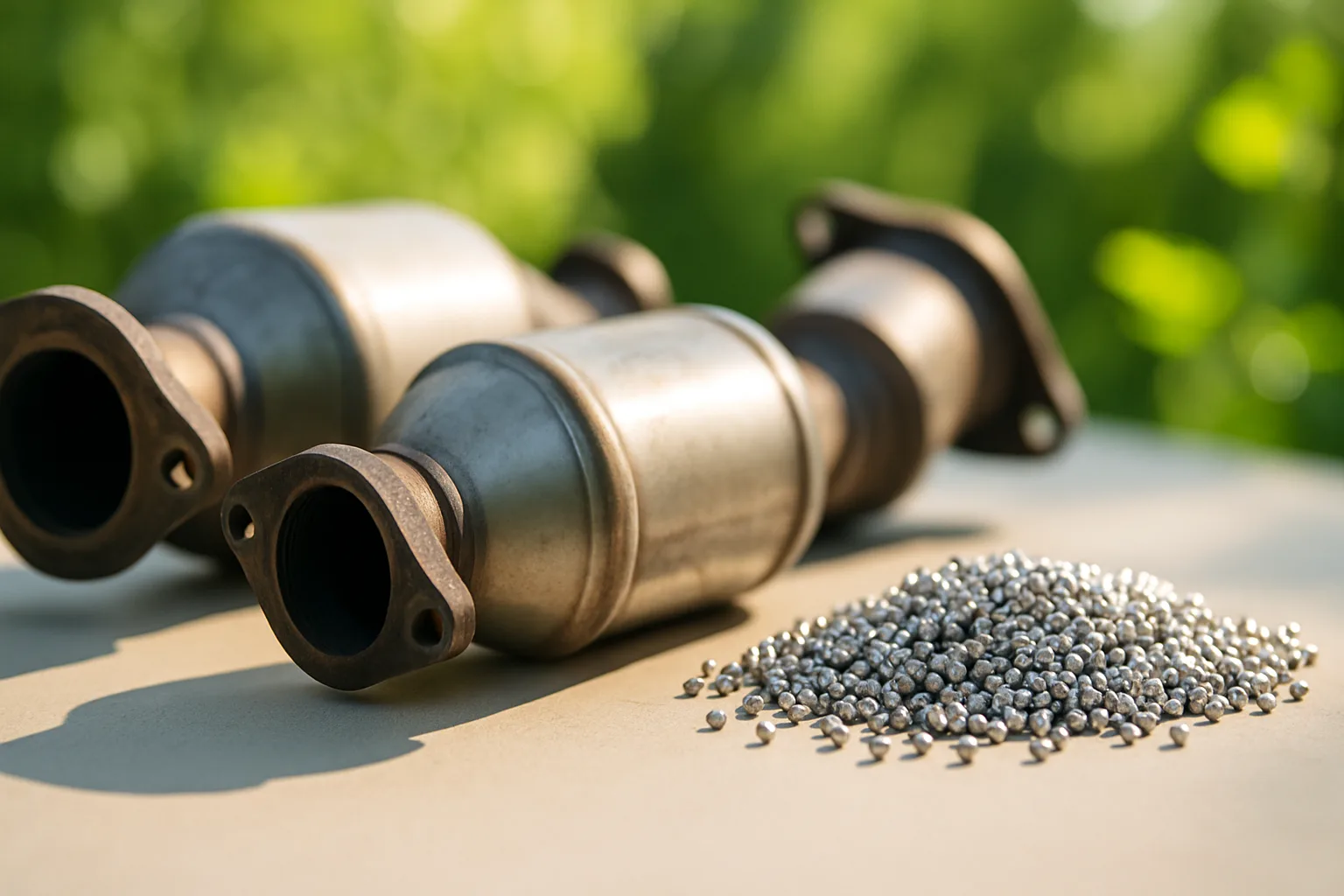
Most people don't realize that leaving a catalytic converter on a scrapped vehicle can cost them real money. OEM catalytic converter value doesn't disappear when a car dies — the platinum, palladium, and rhodium inside are still worth something, and how you remove the unit directly affects what a buyer will pay. A damaged cat, a cut flange, or missing oxygen sensor bungs can all knock dollars off your quote before you even start negotiating.
This guide is for anyone in Ontario — shop techs, individual sellers, or scrap collectors — who wants to remove a catalytic converter safely and preserve its value before selling. Whether you're pulling one unit or processing a batch of cores, the process matters.
Why OEM Catalytic Converter Value Starts at Removal
There's a common assumption that a cat is a cat. Pull it off, toss it in a bin, get paid. That's not how the pricing works. OEM catalytic converters from factory-installed applications carry premium scrap value because the substrate — the ceramic or metallic honeycomb inside — holds higher concentrations of platinum group metals (PGMs) compared to aftermarket units.
When you damage that substrate during removal — by cutting too close to the body, cracking the housing, or letting the unit fall on concrete — you reduce the actual PGM yield a refiner can extract. Buyers on platforms like get competitive bids for your scrap in Canada are quoting based on expected yield. A dented, cracked, or substrate-damaged cat gives them less to work with, and your price reflects that.
The takeaway: removal technique isn't just safety protocol. It's price protection.
Tools You Need Before You Start
Don't improvise this. Cutting corners on tools leads to damaged parts, wasted time, and injuries. Here's what you actually need:
- Angle grinder or reciprocating saw — for cutting through rusted exhaust pipe when bolts won't break free
- Penetrating oil (PB Blaster or equivalent) — applied 24 hours before removal if the vehicle has been sitting
- Impact wrench or breaker bar — for exhaust flange bolts (these are almost always seized)
- Jack stands and vehicle lift or floor jack — never work under a vehicle supported only by a floor jack
- Heat-resistant gloves and eye protection — mandatory, not optional
- Oxygen sensor socket (22mm) — if you're removing O2 sensors before scrapping
- Wire brush — to clean bolt heads before applying tools
In a busy shop environment in Brampton or anywhere across Ontario, you likely have most of this already. If you're an individual pulling a single unit, the penetrating oil and proper jack stands are the two things most people skip — and they cause the most problems.
Step-by-Step: How to Remove a Catalytic Converter Without Damaging It
Follow this sequence. Skipping steps to save time usually means damaging the unit or injuring yourself.
- Let the vehicle cool completely. Catalytic converters operate at temperatures between 400°C and 900°C during normal operation. Even a car that's been off for two hours can still have a hot exhaust system. Wait a minimum of three to four hours — overnight is better.
- Lift and support the vehicle properly. Use jack stands rated for the vehicle's weight. Place them on solid frame points, not on rusted subframe sections common on older Ontario winter vehicles.
- Spray penetrating oil on all flange bolts and O2 sensor threads. Do this the night before if possible. In Ontario's climate, exhaust hardware corrodes fast. Forcing seized bolts without penetrating oil snaps studs and forces you to cut.
- Remove O2 sensors first (if applicable). Some buyers want the sensors included; others don't. Either way, removing them before cutting avoids damaging the sensor wiring or the bung threads in the cat housing.
- Loosen flange bolts before cutting anything. If bolts come free, you can disconnect cleanly at the flanges. This preserves the most pipe length and avoids substrate damage from vibration.
- If bolts are seized, cut the pipe — not the housing. Cut upstream and downstream of the cat body, leaving at least 2–4 inches of pipe on each end. Never cut through the cat body itself. That damages the substrate and reduces OEM catalytic converter value immediately.
- Handle the removed unit carefully. Don't drop it. The ceramic honeycomb inside shatters on impact. Set it down on a rubber mat or padded surface.
- Label and store it properly. If you're processing multiple units, tag each one with the vehicle make, model, year, and engine size. This information affects your quote — get the best catalytic converter price in Canada by giving buyers accurate unit identification.
If you're in a production environment and processing multiple vehicles per day, this sequence becomes second nature quickly. For first-timers, take it slow. A clean removal on a single unit is worth more than a rushed job on three.
What Affects Catalytic Converter Prices Today in Canada
Once the unit is off and clean, pricing depends on several factors that have nothing to do with how careful you were during removal. Understanding them helps you set realistic expectations before you reach out to buyers.
PGM spot prices — Platinum, palladium, and rhodium prices fluctuate daily on international commodity markets. Catalytic converter prices today can be meaningfully different from prices last week depending on market conditions. Always check current rates before finalizing a sale.
Unit identification — OEM units from specific manufacturers carry different PGM loading. A cat from a late-model truck with a large-displacement engine will contain more PGMs than one from a small economy vehicle. Serial numbers, VIN data, and make/model details all help buyers price more accurately.
Substrate condition — A rattling cat (broken substrate internally) is worth less. A cat with visible physical damage to the housing is worth less. An intact, clean unit always commands better offers. This is where your removal technique pays off directly.
Volume — Individual units sell differently than pallet loads. If you're an auto shop in Brampton processing end-of-life vehicles regularly, selling in bulk through a competitive B2B scrap metal marketplace will almost always produce better results than selling one unit at a time through informal channels.
You can read Canadian catalytic converter pricing guides to get a stronger sense of how these variables interact before you go to market.
Why Selling Through a B2B Scrap Metal Marketplace Changes the Math
The old approach: you pull the cat, call one buyer, take whatever they offer. There's no benchmark. You don't know if the price is fair. You just need the cash and move on. That's been the default for decades in scrap — and it consistently leaves money on the table.
The SMASH approach is different. SMASH is a B2B scrap metal marketplace built around competitive auctions. Multiple vetted buyers see your inventory and bid against each other. You're not negotiating from a single quote — you're watching real competition happen in real time. That competition is what drives price discovery. More buyers bidding means better information about what your material is actually worth in today's market.
For shops and collectors in Brampton running volume, SMASH also handles the documentation side. Inventory tracking, photo documentation, auto-invoicing — the admin work that typically falls on the seller gets managed through the platform. If you're processing a load of mixed cats with different unit types, having that inventory documented properly gives buyers more confidence, and buyer confidence translates to stronger bids.
There are no subscription fees. SMASH only wins when you win — commission-based, not upfront costs. That alignment matters. To check current Canadian catalytic converter prices and understand what competitive pricing looks like before your next sale, do that homework first. Then bring the inventory to a platform built for competition.
Safety and Legal Considerations in Ontario for 2026
Catalytic converter theft has driven regulatory attention across Ontario over the past several years, and in 2026 that oversight continues to affect how scrap yards and buyers handle incoming cats. If you're selling converters you've legitimately removed from vehicles you own or are processing professionally, documentation protects you.
Keep the following for every unit you sell:
- Vehicle identification (VIN, year, make, model)
- Proof of ownership or work order (for shops)
- Photos of the vehicle and the removed unit
- Bill of lading or transfer documentation for loads
Legitimate buyers operating in Ontario expect this documentation. If a buyer doesn't ask for it, that's a signal worth paying attention to. Vetted buyers on platforms like SMASH require proper documentation as part of their process — it's a feature, not friction.
If you're running a shop in Brampton or anywhere in Ontario that processes end-of-life vehicles on a commercial scale, staying current with Ontario's scrap metal dealer regulations is part of operating cleanly. That documentation also protects your payout — it removes the ambiguity that gives lowball buyers room to argue.
When you're ready to move your inventory, bring clean documentation, properly removed units, and accurate vehicle data. That combination positions you as a serious seller — and serious sellers get better bids.
Getting the best Canadian price for your catalytic converter starts before you even list the unit. If you've pulled it clean, documented it properly, and you're ready to let buyers compete for it, get a free quote at best-catalytic-converter-price.ca and see what the market will actually pay.
Disclaimer: Catalytic converter prices fluctuate based on PGM spot prices and market conditions. Always verify current rates before finalizing any sale.
Frequently Asked Questions
Q: How much is an OEM catalytic converter worth for scrap in Canada?
OEM catalytic converter value varies significantly depending on the vehicle make, model, engine size, and current PGM spot prices for platinum, palladium, and rhodium. Factory-installed units typically carry more PGM content than aftermarket replacements, which is reflected in higher scrap quotes. Prices fluctuate daily — always check current rates before selling.
Q: Can I sell a catalytic converter I removed myself in Brampton?
Yes, provided you have documentation showing the vehicle was legally yours or that you were authorized to process it. Ontario buyers and scrap yards are required to verify ownership documentation due to ongoing regulatory attention on catalytic converter theft. Keep your VIN records, work orders, and photos — it protects you and strengthens your sale.
Q: What's the difference between OEM and aftermarket catalytic converter scrap value?
OEM units are manufactured to original equipment specifications and typically contain higher concentrations of platinum group metals than aftermarket cats. Aftermarket units use less PGM loading to keep production costs down, which directly reduces their scrap value. When selling, identifying your unit accurately as OEM will generally result in higher quotes from buyers.
Q: How do I get the best price for my scrap catalytic converter in Canada?
The most effective approach is to avoid single-buyer quotes and instead expose your inventory to competitive bidding. A B2B scrap metal marketplace like SMASH connects you with vetted buyers who compete on price, which gives you better insight into actual market value. Accurate unit identification and clean removal also increase buyer confidence and improve offers.
Q: Does damaged or rattling substrate affect my catalytic converter scrap price?
Yes, significantly. A rattling sound from a cat usually means the ceramic honeycomb substrate has broken internally. Buyers price based on expected PGM yield from the substrate — a broken substrate means lower recoverable material and a lower quote. Careful removal that avoids dropping or impacting the unit protects both the substrate and your payout.
Follow SMASH on LinkedIn for scrap metal market updates, industry news, and catalytic converter pricing insights across North America.
```