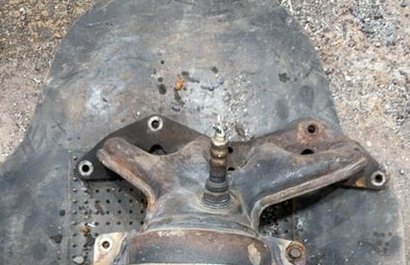
The palladium price today is one of the most important numbers a scrap yard operator or DIY recycler needs to know before pulling a cat off a vehicle. Palladium, platinum, and rhodium sit inside every catalytic converter — and their spot prices directly affect what your converter is worth on the recycling market. If you're in Sydney or anywhere across Nova Scotia, understanding how to safely remove your cat and how to value it correctly can mean the difference between leaving serious money on the table and walking away with a fair price.
This isn't a job where you eyeball it and guess. It's a job where preparation, safety, and documentation all add up to a better outcome — both for your safety and your wallet.
---Why the Palladium Price Today Matters Before You Touch a Wrench
Before you remove a single bolt, check the market. The precious metals inside a catalytic converter — primarily platinum, palladium, and rhodium — fluctuate constantly. A converter that was worth a specific amount last Tuesday might be worth more or less this Sunday. Palladium in particular has been volatile, and its spot price can swing significantly within a week depending on automotive sector demand, mining supply disruptions, and currency shifts.
For Canadian sellers, this matters even more because you're dealing with CAD-denominated payouts, and the CAD/USD exchange rate adds another layer of movement to your final number. Locking in your removal and sale when palladium prices are favourable — rather than just pulling cats whenever it's convenient — is how experienced recyclers maximize their returns.
Before you get started, check current Canadian catalytic converter prices so you know what the market looks like today, not last month.
---Safety First: What You Need Before You Start the Removal
Removing a catalytic converter is straightforward if the vehicle is cold, properly supported, and you have the right tools. Do it wrong and you're dealing with serious burns, a vehicle falling on you, or a converter you've damaged enough to hurt its scrap value. None of those outcomes are worth rushing for.
Equipment you need:
- Floor jack and minimum two heavy-duty jack stands rated for the vehicle weight
- Penetrating oil (PB Blaster or equivalent) — apply to all bolts and pipe fittings 24 hours in advance if possible
- Impact wrench or breaker bar with appropriate socket sizes (typically 13mm–15mm for exhaust flanges)
- Safety glasses and heat-resistant gloves
- Exhaust pipe cutting tool or reciprocating saw with a metal blade (if bolts are seized beyond recovery)
- Wheel chocks and a flat, solid working surface
Critical safety rules:
- Never work under a vehicle supported only by a floor jack. Jack stands only.
- The vehicle must be completely cold. Catalytic converters operate at extreme temperatures — the substrate and shell retain heat for hours after engine shutoff.
- Work in a ventilated space. Even cold exhaust systems carry residual fume risk.
- Disconnect the battery if you're working on a vehicle with oxygen sensors wired near the cat — it prevents accidental sensor activation.
Step-by-Step: Removing the Catalytic Converter Without Damaging Scrap Value
How you remove the converter affects what it's worth. A cat that's been cut sloppily, crushed, or had the substrate cracked out of the shell is harder to process and may return less value. Take the time to do it clean.
- Identify the converter location. Most vehicles have one or two converters positioned between the exhaust manifold and the muffler. Some larger trucks or SUVs have pre-cats and main cats — both have scrap value, but they contain different precious metal concentrations.
- Soak all connection points with penetrating oil. Give it time to work. Seized bolts on the exhaust flanges are the number one reason people damage cats during removal — they force it when they should wait.
- Remove oxygen sensors if present. Use an O2 sensor socket (a slotted deep socket). These sensors have their own scrap value and should never be cut off or left in the converter.
- Unbolt or cut the converter from the exhaust pipe. If bolts break off (common on older vehicles), use a pipe cutter or reciprocating saw to cut the exhaust pipe close to the flange. Leave as much pipe attached to the vehicle as possible — you want the converter itself intact.
- Lower the converter and inspect it. Look for cracks, rattling substrate (damaged honeycomb inside), or signs of meltdown. Document all of this — it affects value and buyers will want to know.
- Photograph and record the serial number. The serial number is typically stamped or welded onto the converter shell. This number is one of the most important pieces of information you have — it identifies the exact make, model, and precious metal content of your specific converter.
That last step matters more than most people realize. If you want to understand how much your catalytic converter is worth by serial number, you need that number documented before anything else happens. Platforms like SMASH use serial tracking and photo documentation to build verified inventory records that give buyers the confidence to bid competitively — which ultimately helps you get better price discovery on what you're selling.
---Scrap Catalytic Converter Prices in Sydney and Across Nova Scotia
If you're based in Sydney, Nova Scotia, your local scrap market is smaller than a city like Halifax or Winnipeg — but that doesn't mean you're stuck accepting whatever a single local buyer offers you. The mistake most sellers in smaller markets make is assuming they have no leverage. You do, if you approach the sale correctly.
Scrap catalytic converter prices in Sydney follow the same precious metal fundamentals as anywhere else in Canada. A common domestic cat might contain 2–7 grams of platinum group metals (PGMs) depending on the vehicle type, while a large diesel truck converter or a foreign pre-cat from a luxury vehicle can carry significantly higher concentrations. The range is wide. A half-blind guess from a single buyer is rarely going to land at the top of that range.
To get the best catalytic converter price in Canada, you need competition — multiple buyers who know exactly what they're bidding on. That's where documentation, serial tracking, and an auction-style format changes the outcome versus a single phone call.
For sellers outside major markets — including Nova Scotia — connecting to a national buyer network through a platform like SMASH means your geography stops limiting your price. If you want to go deeper on how Canadian pricing works, read Canadian catalytic converter pricing guides for practical breakdowns.
---How Serial Numbers and Proper Documentation Drive Better Price Discovery
This is where a lot of sellers leave money behind. They pull the cat, throw it in a pile, and take whatever they're offered. Buyers know this. And buyers price their offers accordingly when they're uncertain about what they're getting.
A documented converter — one with a clear serial number, photos of the condition, weight, and vehicle origin — is a different product than a mystery cat from an unknown vehicle. Buyers can look up the serial number against assay databases and price accordingly. That confidence flows back to you in the form of better bids.
What to document for every converter:
- Serial number (photograph it, don't just write it down)
- Vehicle make, model, year, and engine size
- Condition of the substrate — intact, rattling, or damaged
- Weight of the converter
- Whether oxygen sensors are included or removed
- Photos of both ends and the serial number stamp
This is exactly the kind of scrap metal inventory management that separates serious recyclers from people who treat cats as an afterthought. SMASH's inventory tool is built to handle this documentation systematically — VIN lookup, serial tracking, photo uploads — so your load is presented to buyers as a verified, credible listing rather than an unknown quantity. That's how competition works in your favour.
Whether you're dealing with scrap catalytic converter prices in Sydney or comparing what buyers are offering in Winnipeg, documented inventory gives buyers fewer reasons to discount and more reasons to bid up.
---Pricing Recap: What Drives Catalytic Converter Value in September 2026
As of this week's market roundup, the key factors driving catalytic converter scrap prices in Canada include:
- Palladium spot price: Palladium remains the most significant PGM driver for gasoline catalytic converters. Check the palladium price today before finalizing any sale — even a modest shift in spot price changes your return.
- Rhodium: Still one of the most valuable metals by weight, but its market is notoriously illiquid. Rhodium-heavy converters from specific import vehicles carry premium value.
- Platinum: Primarily relevant for diesel converters. As diesel vehicle volumes shift in the Canadian market, platinum-heavy cats from older diesel fleets remain valuable.
- CAD/USD exchange rate: Canadian sellers receive CAD payouts, but PGM spot prices are denominated in USD. A weaker CAD generally helps Canadian sellers' realized values.
- Volume: Selling a single converter versus a load of 10–20 units changes your negotiating position significantly. If you're an auto shop or small yard in Nova Scotia accumulating cats over time, batching your sales is worth considering.
Disclaimer: Catalytic converter prices fluctuate daily based on precious metal spot markets, exchange rates, and buyer demand. Always find the best price for your scrap in Canada by checking current rates before selling — never rely on prices from a previous week or month.
---Frequently Asked Questions
Q: How do I find out the palladium price today for my catalytic converter valuation?
Palladium spot prices are published daily on commodity exchanges and financial data sites. For Canadian sellers, you also need to factor in the CAD/USD exchange rate since PGM prices are USD-denominated. Platforms like SMASH incorporate current market data so buyers are pricing against real-time precious metal values, not guesses.
Q: What are scrap catalytic converter prices like in Sydney, Nova Scotia?
Sydney follows the same national market fundamentals as the rest of Canada — converter value is driven by PGM content, condition, and documentation, not your local geography. The challenge in smaller markets is finding enough buyer competition. Using a platform that connects you to a national network of vetted buyers helps level that playing field regardless of where you're located in Nova Scotia.
Q: How much is my catalytic converter worth by serial number?
The serial number lets buyers cross-reference your specific converter against assay databases that document the known PGM content for that converter type. A clean, intact converter with a legible serial number from a high-value vehicle (late-model import SUVs and trucks often carry more PGMs) can command significantly more than a damaged or unidentified unit. Always photograph the serial number before removal.
Q: Is it legal to remove and sell a catalytic converter in Canada?
Selling your own catalytic converter from a vehicle you own is legal in Canada. Regulations around catalytic converter recycling vary by province, and some jurisdictions require sellers to provide proof of ownership or vehicle identification. Check your local rules in Nova Scotia before selling to ensure you have the documentation required by buyers and scrap dealers.
Q: How do catalytic converter scrap prices in Winnipeg compare to other Canadian cities?
Catalytic converter scrap prices across Canada — from Winnipeg to Sydney — are driven by the same national and international PGM markets. Local variation comes down to buyer competition and transportation costs, not fundamentally different pricing. Selling through a competitive platform removes much of that geographic disadvantage by bringing multiple buyers to your listing regardless of where you're located.
---If you've pulled the converter correctly, documented it properly, and understand what the palladium price today means for your specific unit — you're already ahead of most sellers. The last step is making sure you sell it into a market with real competition, not just the first offer that shows up. Get the best Canadian price for your catalytic converter and get a free quote at best-catalytic-converter-price.ca.
Follow SMASH on LinkedIn for weekly scrap metal market updates, PGM price insights, and recycling industry news across North America.