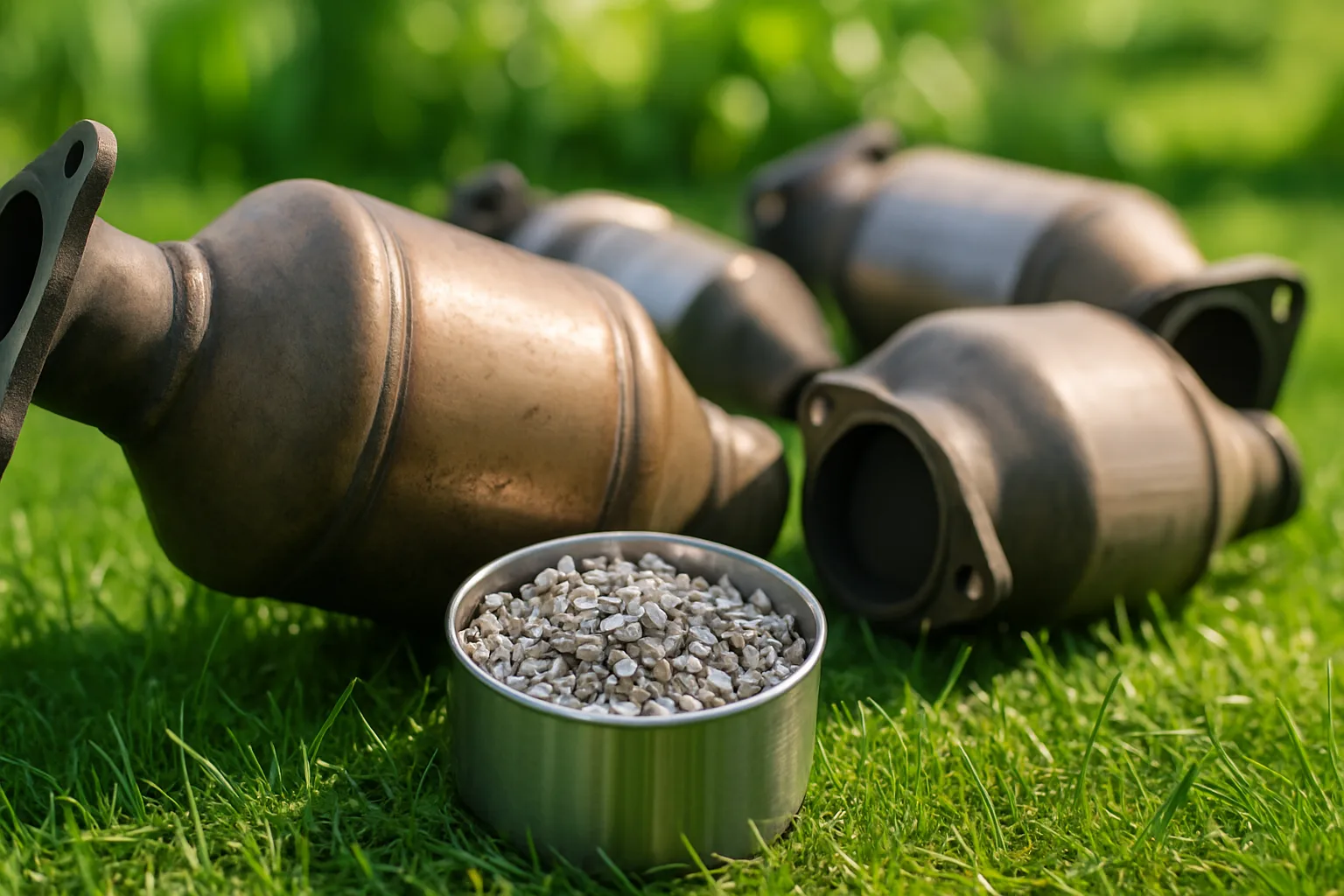
Rhodium price today sits at levels that make a single catalytic converter worth more than most people expect — and yet thousands of Canadians hand them over for a fraction of fair market value. If you're pulling a cat off a vehicle for recycling, how you remove it and how you sell it determines how much money you actually walk away with. These are not the same thing, and most people only think about one of them.
This week's market recap covers both sides: the practical steps for safely removing a catalytic converter, and what you need to know about current precious metal markets before you sell. Whether you're running an auto shop in Oshawa scrap metal services, flipping salvage vehicles on the weekends, or just pulling a dead car out of your driveway — read this before you touch a wrench.
Why the Rhodium Price Today Should Change How You Sell
Catalytic converters contain three precious metals: platinum, palladium, and rhodium. Rhodium is the wildcard. It's the rarest of the three, and its price swings harder and faster than either of the others. When rhodium climbs, a single high-grade converter — say, from a late-model Honda or Toyota — can command serious money. When it dips, margins tighten fast.
As of late July 2026, precious metal markets remain sensitive to industrial demand from the automotive sector, supply chain pressure out of South Africa (which produces the majority of the world's rhodium), and broader commodity trends. We won't invent a number here — rhodium spot prices change daily, sometimes hourly. What matters is that you check current Canadian catalytic converter prices before you sell, not after. Selling blind is how you leave real money behind.
Here's what drives your converter's actual value:
- Make, model, and year — OEM catalytic converter value varies significantly by vehicle. A converter from a luxury European marque differs wildly from one off a domestic pickup.
- Grade and substrate type — ceramic versus metallic substrate, and the density of the precious metal loading inside.
- Condition — a cracked or melted-out converter loses value fast. The substrate needs to be intact.
- Current spot prices — platinum, palladium, and rhodium prices at the time you sell.
How to Safely Remove a Catalytic Converter for Recycling
Removing a catalytic converter sounds simple. It's bolted to the exhaust system — cut or unbolt it and you're done. But doing it wrong costs you time, damages the part, and in some cases creates a safety hazard. Here's how to do it right.
Tools You'll Need
- Jack stands or a vehicle lift (never work under a vehicle on a floor jack alone)
- Breaker bar and oxygen sensor socket (22mm is standard for most O2 sensors)
- Penetrating oil (PB Blaster or equivalent)
- Reciprocating saw or angle grinder with a cutting wheel, if bolts are seized
- Safety glasses and heat-resistant gloves
- A camera or phone — you'll want photos
Step-by-Step Removal
- Let the vehicle cool completely. Catalytic converters run extremely hot. Touching one that's recently been driven risks serious burns. Wait at least two hours after the engine last ran, preferably longer.
- Raise and secure the vehicle properly. Use jack stands rated for the vehicle weight. Do not use a bottle jack as your only support. This is not negotiable.
- Soak all fasteners with penetrating oil. Canadian winters mean rust, and rust means seized bolts. Spray the flange bolts and any clamps generously. Let it soak for at least 20 minutes — longer if the vehicle is older.
- Remove the oxygen sensors first. If you cut through the cat without removing the O2 sensors, you're destroying sensors worth $50–$200 each. Use the proper O2 sensor socket and save them. If they're seized, apply more penetrating oil and try again with a longer breaker bar.
- Unbolt or cut the flanges. Most converters connect at front and rear flanges with bolts. If the bolts won't break free, cut the pipe on either side of the flange — not through the converter body itself. Cutting through the substrate destroys value.
- Photograph the converter before it goes anywhere. Photo documentation of the make/model vehicle it came off, the converter's serial number or part stamp, and its physical condition helps you sell it for a better price. Buyers on transparent platforms want to know what they're bidding on.
- Store it properly. Keep it dry and protected from impact. A cracked substrate reduces assay value.
If you're in Ontario and operating any kind of resale or scrap business, keep records of where your converters came from. Documentation protects you legally and makes it easier to get the best catalytic converter price in Canada from legitimate buyers who pay a premium for provenance.
OEM Catalytic Converter Value: Not All Cats Are Created Equal
One of the most common mistakes sellers make is treating every catalytic converter like it's worth the same. It isn't. OEM catalytic converter value ranges from under $50 for a depleted aftermarket unit to several hundred dollars or more for a high-grade original equipment converter from the right vehicle. The substrate loading of platinum, palladium, and rhodium varies enormously by manufacturer and model year.
Some categories that typically carry higher scrap value:
- Pre-2010 high-displacement vehicles with large substrate volumes
- Diesel oxidation catalysts (DOCs) from large trucks — different precious metal mix but still valuable
- Hybrid vehicle converters — often higher rhodium content due to different operating cycles
- European OEM converters — frequently high-grade due to stricter emissions standards
Aftermarket or "direct-fit" replacement converters contain far less precious metal loading than OEM units. If you're sorting a pile, separate OEM from aftermarket before you price anything. Selling them in a mixed lot without identifying grades leaves money on the table.
Sell Catalytic Converters Online: Why Competition Produces Better Prices
The old way to sell a catalytic converter in Oshawa — or anywhere in Ontario — was to call a local yard, take their number, and move on. One buyer. One offer. No way to know if you were close to market or a hundred dollars short. That's not a market. That's a guess.
The shift to selling catalytic converters online through competitive auction platforms changes the math entirely. When multiple vetted buyers bid on your material, you get price discovery. The market tells you what your cats are actually worth on that day, with those spot prices, for that grade of material.
The SMASH Recycling auction platform operates exactly this way. Vetted buyers compete for your material — no subscription fee, no guessing. SMASH handles the documentation side too: photo uploads, serial tracking, VIN lookup for vehicle-specific identification. That documentation matters because serious buyers pay more for material they can verify. If you've photographed your converters properly during removal, you're already ahead.
Sellers who want to read Canadian catalytic converter pricing guides will find consistent advice pointing in the same direction: more buyers means better price discovery. It's not complicated. It's just how markets work when they're allowed to work properly.
This Week in the Market: What Oshawa and Ontario Sellers Should Watch
The week of July 21–26, 2026 brought continued movement in PGM markets. Palladium remains under pressure from the ongoing shift toward battery electric vehicles in the passenger car segment — a structural trend, not a blip. Platinum has seen modest support from industrial demand outside automotive. Rhodium, characteristically, remains volatile and continues to attract attention from processors who track it closely.
For sellers in Ontario, the practical takeaway is straightforward: if you're sitting on inventory, movement in any of these metals between now and when you sell can shift your return. Holding for a swing makes sense only if you're tracking prices actively. For most individual sellers and smaller shops, the better play is to list promptly on a platform that creates competitive pressure — rather than waiting and guessing.
Sellers from across Ontario — including active markets like Oshawa, Hamilton, and the GTA — are increasingly using online platforms rather than relying on a single local yard relationship. The local yard isn't going away. But it now competes for your material rather than being the only option. That's a better position to be in as a seller.
Whether you're in Ontario or looking into catalytic converter recycling in Vancouver, the principles are identical: document your material, know your grades, and sell into competition. Prices fluctuate — check current rates before you commit to any offer.
If you've got converters ready to move, the best first step is to get a real quote based on today's market. Don't leave it to a single phone call. Get the best catalytic converter price in Canada by putting your material in front of buyers who have to compete for it — and find out what your cats are genuinely worth this week.
Frequently Asked Questions
Q: How do I find the rhodium price today for my catalytic converter?
Rhodium spot prices update throughout the trading day and are published on commodity market platforms. However, the price you receive as a scrap seller is based on the assayed content of your specific converter, not the raw spot price. Your converter contains a fraction of an ounce of rhodium — so the spot price is a reference point, not your direct payout. Use a price lookup tool or get quotes from multiple buyers to understand what your specific unit is worth on today's market.
Q: Is it legal to remove and sell a catalytic converter in Ontario?
Yes — removing a catalytic converter from a vehicle you own and selling it for scrap recycling is legal in Ontario. Regulations focus on preventing theft and ensuring scrap dealers document the source of converters they purchase. Keep records of the vehicle the converter came from, including the VIN, and deal with licensed buyers. Ontario has tightened scrap metal dealer regulations in recent years, so documentation is both a legal requirement and a seller protection.
Q: What's the difference between OEM and aftermarket catalytic converter scrap value?
OEM (original equipment manufacturer) catalytic converters are built with higher precious metal loading because they're designed to meet strict emissions standards for the life of the vehicle. Aftermarket replacement converters use less platinum, palladium, and rhodium to keep costs down. This translates directly to scrap value — OEM converters typically fetch significantly more than aftermarket units of similar size. Always identify which type you have before pricing your material.
Q: Can I sell catalytic converters online from Oshawa?
Yes. Online auction platforms like SMASH allow sellers anywhere in Ontario — including Oshawa — to list catalytic converter inventory and receive competitive bids from vetted buyers. This removes the limitation of relying on a single local yard and typically produces better price discovery. You'll need accurate photos, vehicle sourcing information, and basic documentation to list effectively.
Q: How much is a scrap catalytic converter worth in Canada right now?
Catalytic converter scrap prices in Canada vary widely based on the make and model of the vehicle, the grade of the converter, and current platinum, palladium, and rhodium spot prices — all of which fluctuate daily. There's no single answer. The most accurate way to find out what your specific converter is worth today is to use a price lookup tool or submit it for quotes through a competitive buyer platform. Disclaimer: Prices fluctuate based on precious metal markets. Always verify current rates before selling.
Follow SMASH on LinkedIn for weekly scrap metal market updates, PGM price movement commentary, and industry insights that help you sell smarter.
```